Clifton Mining is an American Fork-based company that owns and leases mining claims in the Clifton/Gold Hill district of Utah, about an hour south of Wendover. Clifton doesn't perform any mining themselves, instead they lease out their properties to third parties who do the mining. This analysis is broken down into 3 sections, reflecting three distinct aspects of the business. These are 1)their equity investment in American Silver LLC, 2)their investment in and lease with Desert Hawk Gold Corporation, and 3)their remaining mining claims.
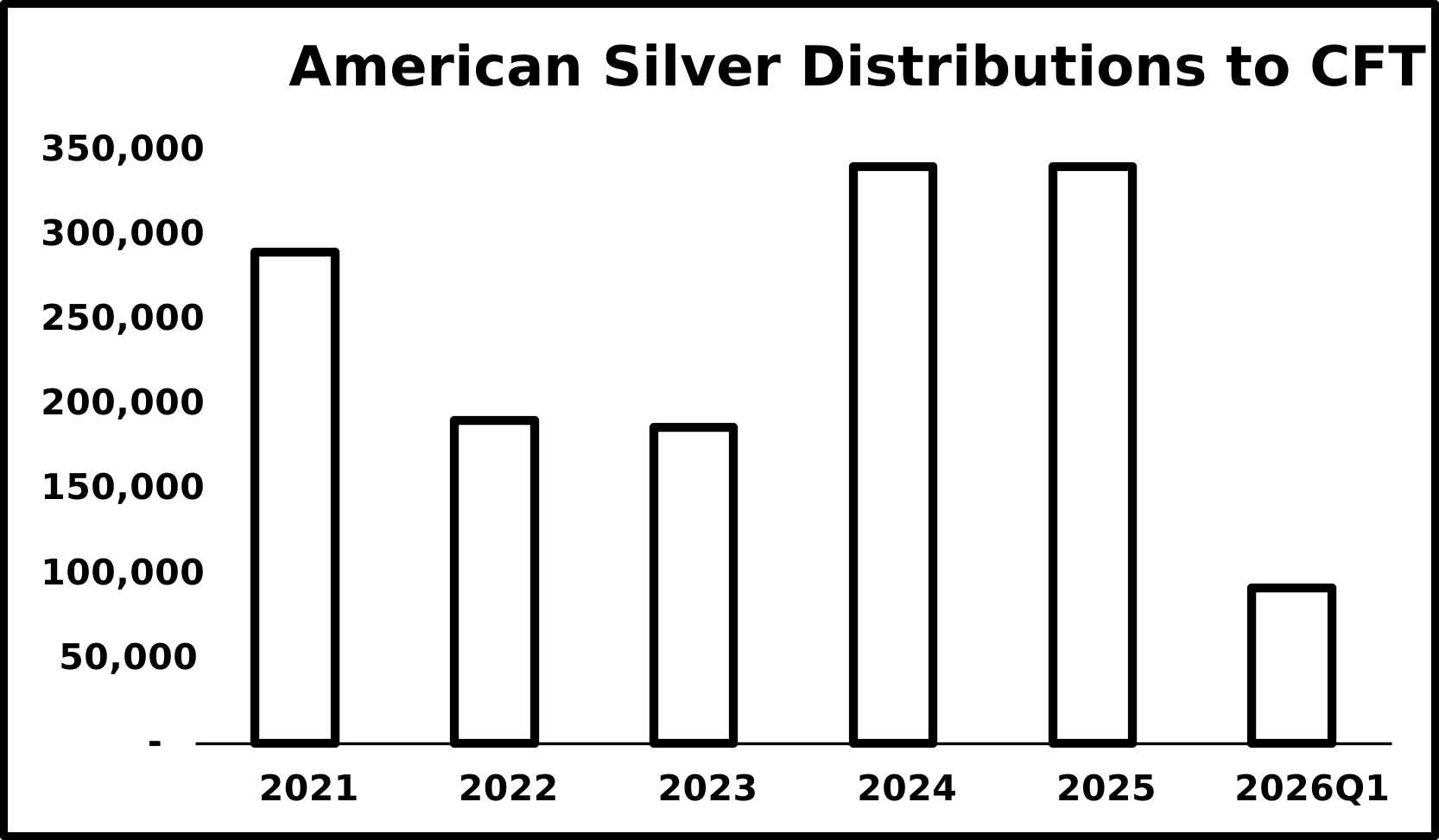
American Silver: American Silver is a company that was founded by Bill Moeller in 1998. Today, his son Scott runs the company and is also CFO and a board member of Clifton Mining. American Silver is a manufacturer of nano silver products. When silver is melted down into microscopic particles, it has been shown to exhibit antimicrobial properties. Because of this, people for years have been creating products of various uses that are infused with silver particles. According to their website, ABL Manufacturing (a subsidiary of American Silver) is the world's largest manufacturer of liquid nano silver. American Silver's total sales were around $13.8 million for FY 2025 and $3.6 million for Q1 2026. On those sales, they took home net income of $1.1 million and $205k, respectively. On Amazon, most products on the ABL store get over 4 stars, and their most popular product, a skin gel, gets 4.7 stars with ~4k ratings. Currently, the main source of cash and income Clifton receives is in the form of distributions from American Silver, in which Clifton owns a 20.7% stake. These distributions totaled $340k for each of 2024 and 2025, and $92k for Q1 26. The chart below shows the distributions to Clifton over the past 5 fiscal years.
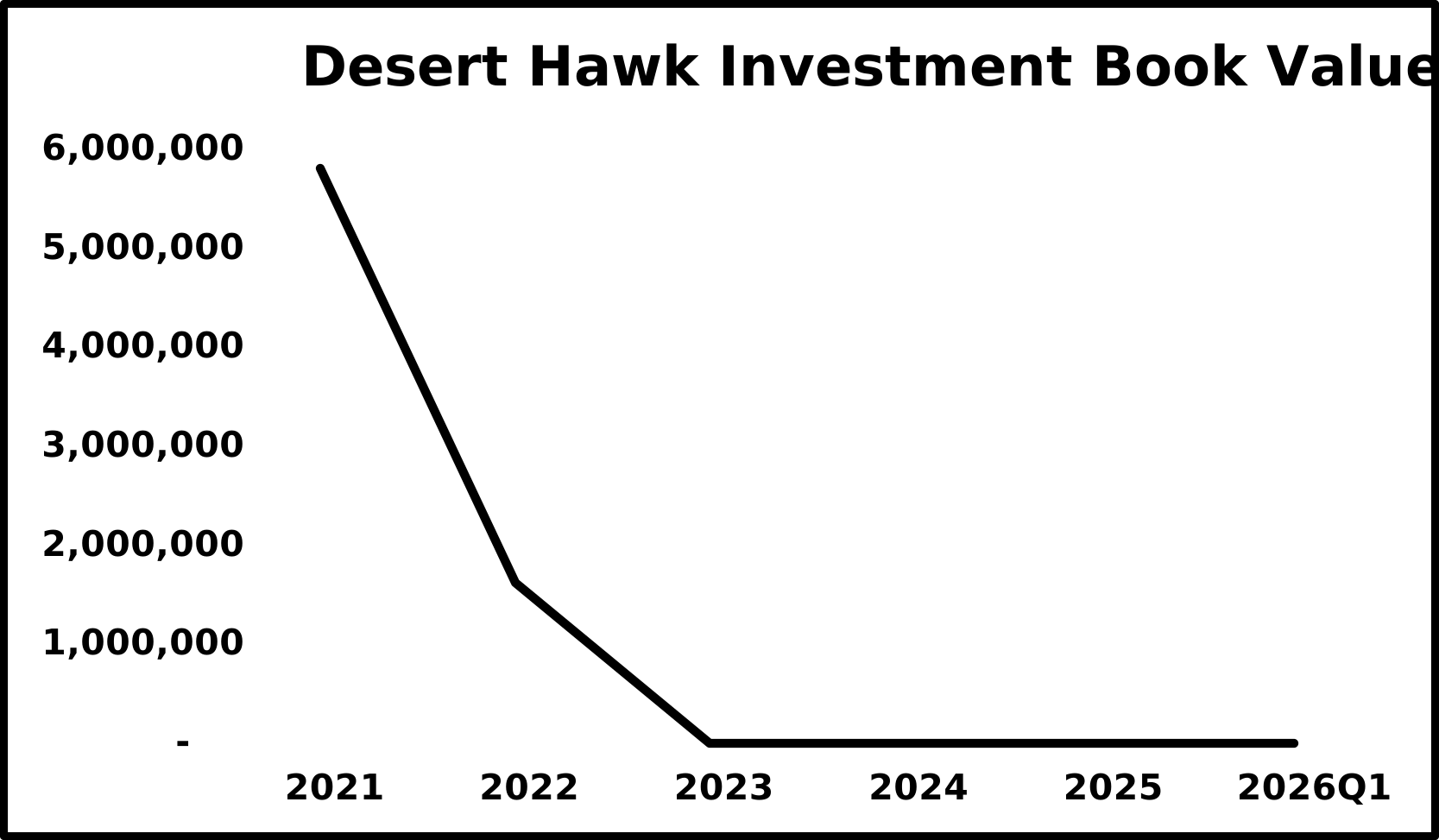
Desert Hawk Gold Corp: Desert Hawk Gold Corp is a gold mining company that has a lease with Clifton that started in 2009. In 2019, the two parties renegotiated the lease and as part of this renegotiation, Clifton gave up its 6% royalty in the production from this land. In return, Desert Hawk issued Clifton 5.5 million shares of stock. Desert Hawk declared bankruptcy in 2024 but emerged in 2025. After the bankruptcy, Clifton wrote down the value of their investment in Desert Hawk to $0 on their balance sheet and have kept it there since.
In April 2025, Clifton announced that Desert Hawk had "started mining and loading the heap leach pad once again," and in July they announced that Desert Hawk had "sold just over a half million dollars worth of gold in the last month or so." At the October Clifton shareholders meeting, Michael Marr of Desert Hawk shared that at the time they were producing around 6 oz of gold per day. Clifton issued a press release on December 18th in which they announced that production had slowed to 4 oz per day and they were trying to resolve the issues causing this. They also announced that they were "working with a buyer that made an offer on ownership interest in DHGC." Finally, on June 16th, Clifton announced that, in the first 5 months of the year, Desert Hawk had sold 631 ounces of gold and 628 ounces of silver, at an average price of $5,000 and $80, respectively. This amounts to ~$3.2 million in revenue for DHGC in the first 5 months of the year.
The difficulty in analyzing this portion of the business is that we don't know enough about the specifics of the bankruptcy dealings, the current ownership percentage Clifton has, and the cost structure for Desert Hawk. Here are a few things we do know. As of 6/30/25, Clifton owned a 17.5% stake in Desert Hawk, but they haven't disclosed their ownership percentage in subsequent reports. It may have been diluted in subsequent ownership-change transactions. Before bankruptcy, Desert Hawk reported having $30 million in liabilities on their 2023 10-K, and a $20 million shareholders' deficit. In the 3/31/26 report, Clifton said that they kept the investment at $0 due to Desert Hawk being "in default on significant liability contracts and there being questions regarding the recoverability of the asset value."
Additional Mining Claims: Clifton has the following mining claims. They have a total of 402 unpatented lode claims, 32 unpatented placer claims, 7 state mineral leases and 82 patented claims. In total, these claims span 14,667 acres of land. The Desert Hawk lease ties up 10 of the patented claims and 66 of the unpatented lode claims, spanning 1,475 acres. So the company has a lot of land that could be leased out. They are currently attempting to do so with much of their land. Last October, President Ken Friedman mentioned that they have had conversations with multiple different interested parties. This interest, according to Friedman, is due to the recent strength in previouis metals prices. The below chart shows the price increases in Gold and Silver over the past year and a half.

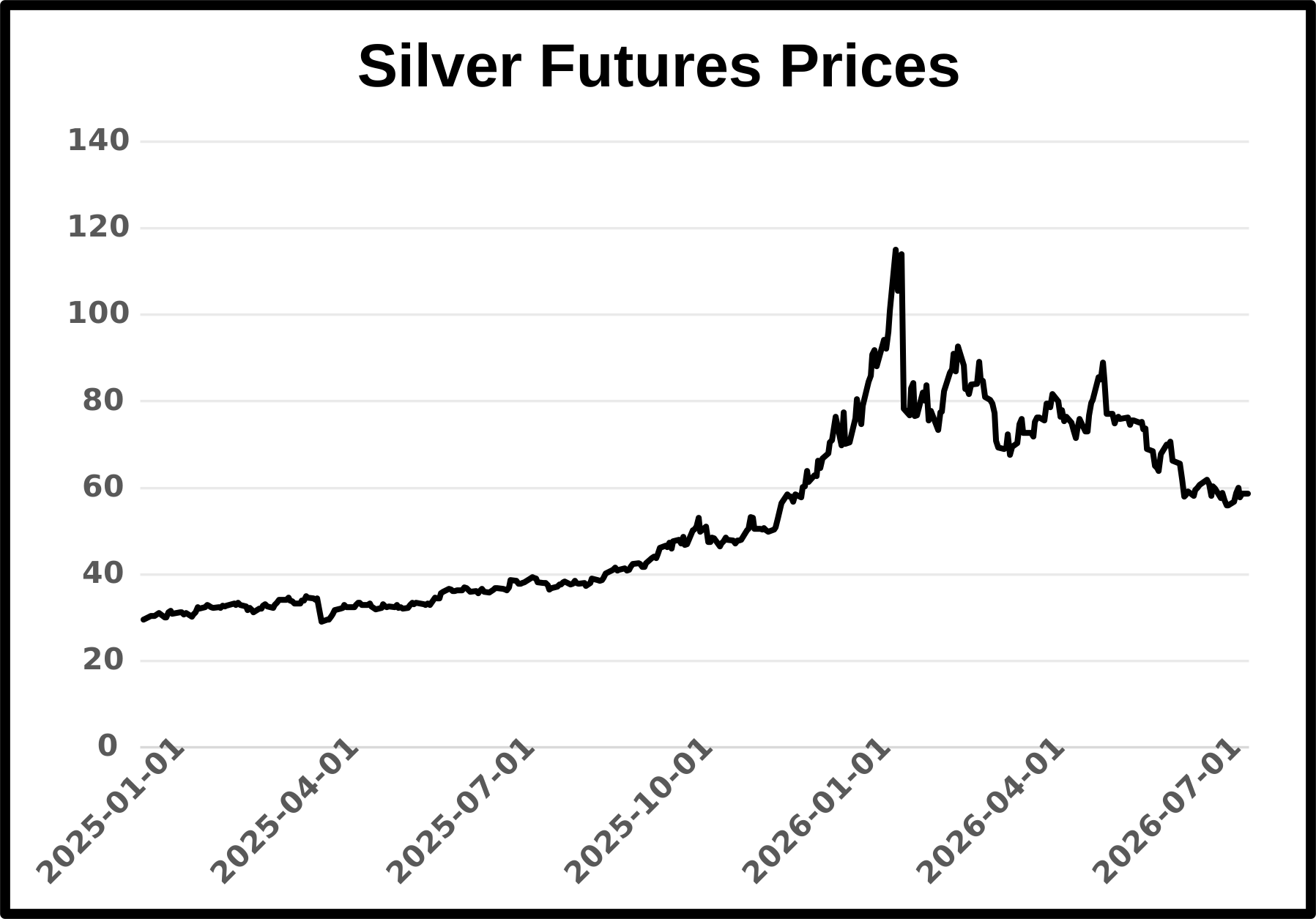
These price trends in precious metals are encouraging for both the Desert Hawk investment and the additional mining claims that Clifton owns. Clifton does have property reports listed on their website which show estimates of the amounts of different minerals that exist on the Clifton properties. See the below table from the Shear Zone Summary report available on their website. Note that 'opt' stands for ounces per ton, so if you multiply the opt number by the amount of tons, you get the number of ounces for that mineral.
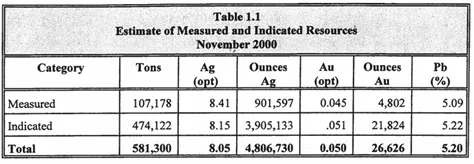
This report is just for one of the company's properties, the Clifton Shear Zone. This property spans 4,073 acres, according to the report. This is just over a quarter of Clifton's total acreage. While the other properties don't have as detailed reports, we can assume that they have some amount of minerals. In summary, Clifton has additional mining claims that are not currently being worked on, but if they are able to make a deal for these properties, they have an opportunity for an additional revenue stream. While there has been optimism from management about making a deal, it has been a long time since metal prices started rising and it has yet to happen.
Clifton has a healthy balance sheet, with very few liabilities and no debt. At the end of Q1, they had just $4.6k in current liabilities and $76.6k in total liabilities. However, due to a lack of income besides that from American Silver (so far, not enough to cover their expenses), the cash position has slowly deteriorated over the past few years. At the end of 2020, the cash position was $3 million, and at the end of Q1 26 it was $1.23 million. Free Cash Flow has averaged negative $296k since 2021, but has trended upward in the past couple years as distributions from American Silver have increased and operating expenses have decreased.
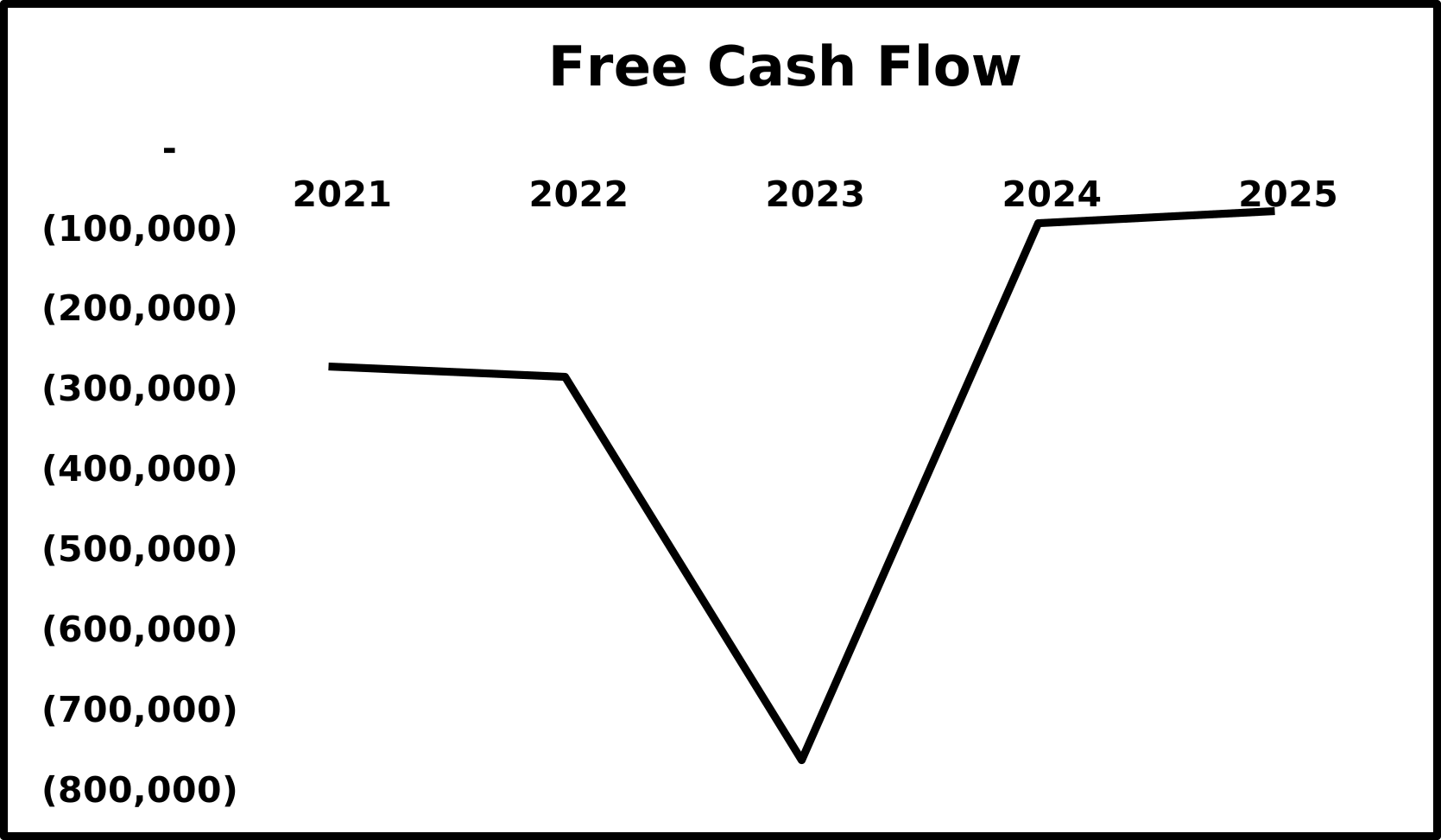
So while there is no need for immediate concern about Clifton's financial health, it is important that they start to make income through an increase in receipts from one of their three sources.
Out of the four valuation ratios I typically look at, the price-book ratio is the only one usable for Clifton since they have negative earnings and cash flow, and no revenue. The book value of Clifton's equity was $4.2 million at the end of Q1 26 which, with a stock price of $.18 (closing price on 7/24/26) and 55 million shares outstanding, gives it a price-book ratio of 2.44. In comparison, the TUI index median ratio is 1.57. Valuing Clifton is difficult with just this ratio and while we can say there is potential in the Desert Hawk investment and the additional mining claims, it is harder to put a number on what that potential could be. At its current valuation, in order for Clifton to meet the median earnings or cash flow ratios in the TUI index, it would need to achieve earnings of $643k or operating cash flow of $786k. Clifton's trailing-twelve-month numbers for those are -$311k and -$436k, respectively.
The Clifton Mining stock has the following strengths, potential, and risks. The investment they have in American Silver has been consistently providing them with cash flow that has offset a good portion of their annual expenses. The investment in Desert Hawk has potential if they are able to continue to ramp up production and start to settle their liabilities. They own a significant amount of mining claims that could be leased or joint ventured with other companies to bring them into production. The increases in the price of gold and silver over the past couple of years helps with the latter two business segments. Since they have very few liabilities and their cash burn is relatively low compared to their cash balance, Clifton is not at risk of becoming insolvent or going bankrupt in the near future. However, that doesn't mean the stock has no risk. The Clifton stock has risen 80% so far in 2026, and 350% since the beginning of 2025. Since this is such a small company, just over $10 million in market cap, it doesn't take much buying to make the stock rise significantly. My guess is that the rise has been primarily due to optimism around metals prices. As shown earlier, gold and silver prices have shot up over the past couple years. However, since reaching highs early this year, gold has dropped by over 23% and silver by 49%. If this trend continues, it could be a headwind for Desert Hawk and Clifton. It could also decrease the likelihood of them making deals on their mining claims. Another risk for Clifton as an investment is that the shares are thinly traded and have a wide bid-ask spread. This means that if you need to sell your shares, it may be at a significant discount to the quoted price. Ultimately, I believe the future performance of this stock will depend on what happens with metals prices, whether Desert Hawk can achieve successful operations, and whether Clifton can make deals on their other mining properties.
This article is not investment advice - do your own research before making any investment decisions. See my portfolio page for a list of the stocks I currently own.